Why resistance matters
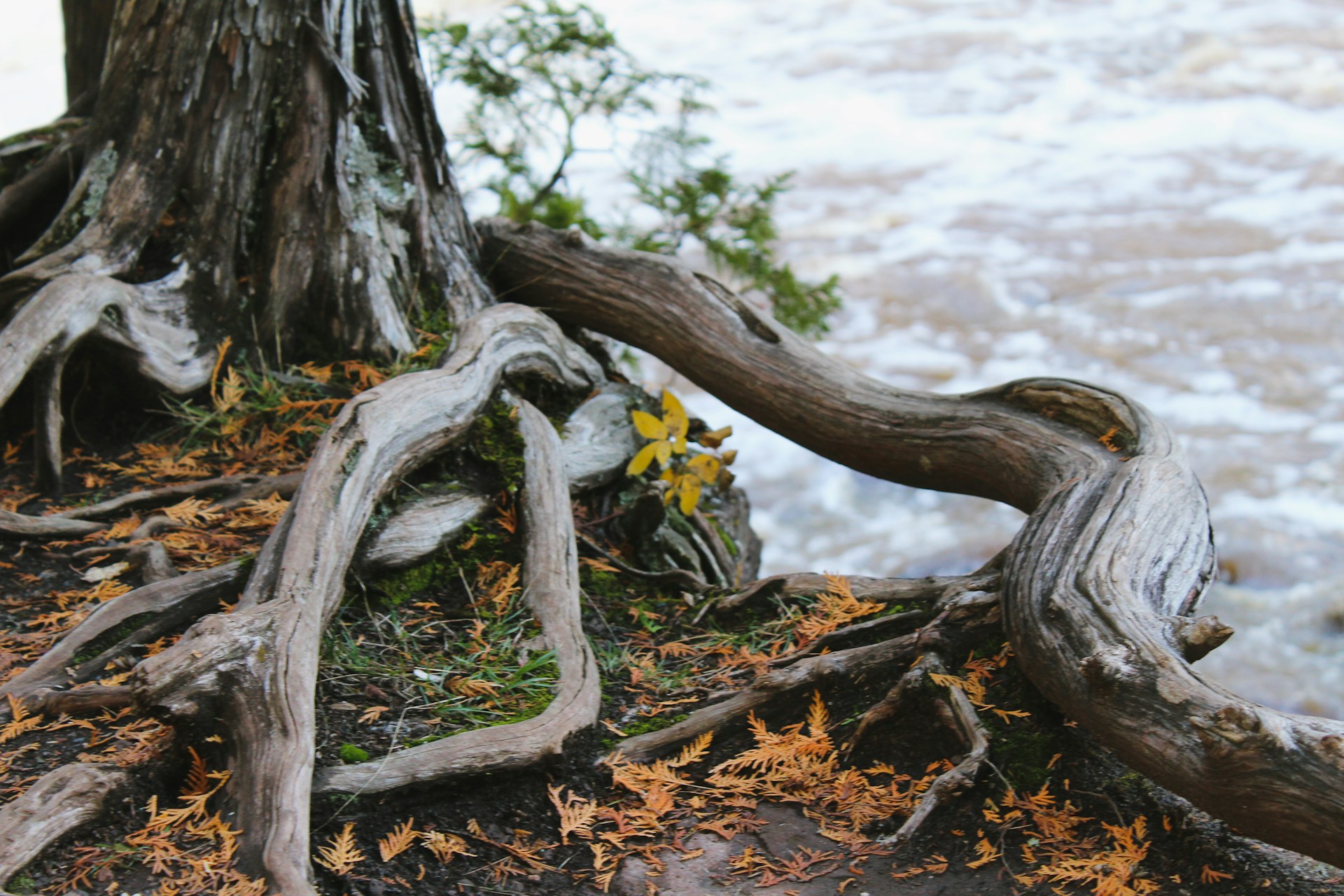
In the early 90’s, in Arizona, a group of 8 scientists sealed themselves off for two years in a complex facility of glass pyramids and domes known as the Biosphere 2. Designed to test the viability of living in a self-contained environment in outer space, it housed 3 acres of different ecosystems: rainforest, ocean, wetlands and savannah. Initially, everything went well, but one of the biggest lessons came from the trees. The scientists noticed that although the trees grew significantly faster than in the wild, they collapsed under their own weight once they reached a certain height. The dome offered perfect water and light, but lacked natural wind. And without wind, the trees’ root systems remain shallow and underdeveloped, unable to support their growth.
Like trees, it is the resistance we meet in life that strengthens our resilience.
An ecological perspective on resilience
Resilience is defined in many ways but this time, I was interested in an ecological perspective. According to the OECD, agricultural resilience is described as the capacity of farming systems and landscapes to absorb, recover, adapt and transform in the face of adverse events like climate change, economic volatility and pest outbreaks. Reading this reminded me of the same emotional labour that individuals go through when experiencing a transition that challenges their capacity.
Capacity, in this sense, can be thought of as a living system that determines how much you can hold, how well you can recover and how you reorganise yourself when life stretches you.
The Window of Tolerance
When the topic of resilience comes up with clients, I often talk about the Window of Tolerance, a concept by psychiatrist Dr Dan Siegal that describes how the brain responds to stress.
The window of tolerance is the optimal zone of nervous system arousal in which a person can effectively function, where they can think clearly, listen, stay grounded and remain socially connected. We are emotionally regulated, cognitively flexible and socially engaged. When life becomes too fast or too full, we get pulled out of this zone and may enter a state of:
- Hyperarousal - where our brain has been triggered by a threat and our nervous system enters a fight or flight state. We are reactive, hypervigilant, impulsive, anxious..
- Hypoarousal - where the brain shuts down to protect itself and our nervous system enters a freeze or fawn response. We experience numbness, exhaustion, withdrawal.
Trauma and chronic stress can narrow a person’s window of tolerance which means that minor stresses can easily push them outside of their window. It wouldn’t be natural for us to be within our optimal window of tolerance all the time, because that simply isn’t the reality of life. What is more important to learn is how to quickly self-regulate and recover to return to our optimal zone.
Somatic leadership
Richard Strozzi-Heckler’s work on somatic leadership is founded on the idea that our behaviours under pressure are not cognitive choices but embodied patterns that we have rehearsed over many years. Capacity, from this perspective, is about organising the body in a way that supports clarity, presence and equanimity.
Leadership is relational and a leader’s body communicates before their words do. By strengthening embodied awareness, leaders can teach their bodies how to maintain stability even when the environment around them is volatile.
The hidden stress we carry
Stress looks different for everyone. For most of us, it’s not a big event that stresses us but our thoughts and emotions surrounding it.
There is a great deal of focus on health and longevity these days. I was listening to a podcast by Dr Elisha Goldstein, author of Tiny Shifts, where he talked about a subtle kind of stress many of us might recognise: you aren’t fully stressed but you aren’t fully relaxed either. This stress runs quietly in the background and your mind is not aware of it but your body is. You carry the tension in your shoulders, your back, your jaws, your hips or your knees and you carry on without rest or taking time to recover from each busy transition in your day. We understand the power of compound interest in investing, yet rarely apply the same principle to our bodies.
Dr Goldstein argues that emotional health is fundamental for longevity. The overwhelm of modern day living stems from emotions dictating our reactions rather than life being inherently harder. And it’s the everyday emotions of fear before a difficult conversation; shame after losing our temper with our children or self-doubt when we are trying something new. All these emotions affect our bodies at a cellular level.
Here are two lessons I learnt about resilience:
Resilience is built before a crisis, not in the midst of it
While caring for my son through his treatment, people would often ask me whether I’d tried meditation. I did have a yoga and meditation practice but it was far from perfect and consistent. In a crisis, your body is in survival mode, so it’s harder to deepen a practice or absorb new skills. Your body simply reaches for what it has rehearsed, however imperfectly. You cannot strengthen your roots in the middle of a storm. You simply rely on what is available to you at that point.
Our nervous system builds capacity through everyday habits, micro-practices for recovery that help widen our window of tolerance. Returning to the ecological sense of building capacity, it isn’t something you build once. Just as our emotions shape every cell in our bodies, our capacity is something we need to tend to. It expands and contracts. It responds to pace, pressure, relationships and like any living system, it sends us signals long before it reaches its limits.
Resilience in rhythmic
Nature reminds us that resilience is rhythmic. You only need to look at the waves crashing against the shoreline or the trees losing their leaves in autumn to realise that building resilience requires seasons of waiting and recovery.
Emotional health is not about being in a permanent state of calm. Our bodies are built on rhythms: the rhythm of our heart, the rhythm of our breath, the circadian rhythm of our sleep. Our nervous system is designed to expand and contract. When we inhale, we awaken our sympathetic nervous system (fight/flight) mobilising energy and when we exhale, we engage the parasympathetic (rest/digest) system which restores balance. Burnout happens when we try to stay on a permanent ‘in-breath’.
How can we influence the state of our inner ecosystem?
Summer has officially begun here in Dubai and our holiday season for rest and recovery has arrived. Here are a few ideas to experiment with:
Absorb: When a wave passes, the water absorbs the energy by rising up, rather than resisting it. In life, this means meeting the emotion without suppressing or resisting it. We can do this by simply recognising the emotion. Name it to tame it.
Recover: You cannot stay at the peak of a wave forever. For the wave itself, gravity pulls the water down and back. In practice, this can be as simple as relaxing the shoulders or taking a longer pause before your next meeting or simply lengthen your exhale.
Adapt: Waves meet obstacles all the time and they adapt their shape, speed or direction depending on whether it’s an island, a stone barrier or a narrow harbour. In the same way, widening our window of tolerance is an adaptive process. By practising micro-recoveries repeatedly, our nervous system learns to flex in the face of stressors without crashing and burning through rigidity.
Transform: The continuous rhythmic flow of waves naturally reshapes the coastline/landscape over time. In life, this is the compound interest of building our capacity through tiny shifts over time.
Resilience is not about enduring or staying strong. It’s about staying attuned to the signals your body whispers, noticing the pace of your days, recognising the emotional labour you unknowingly carry and honouring the season your inner ecosystem is in.
Capacity is built in small moments and it expands when we pay attention to these rhythms.
It is not the most intellectual of the species that survives; it is not the strongest that survives; but the species that survives is the one that is able best to adapt and adjust to the changing environment in which it finds itself. - Charles Darwin